
Why Is My Furnace Blowing Cold Air? 8 Causes & Fixes
Key Takeaways
- Check your thermostat first. Make sure it's set to HEAT and the fan is set to AUTO rather than ON.
- Inspect your air filter. A clogged filter can restrict airflow and cause the furnace to overheat or shut down.
- Check your heating oil tank. Oil-fired furnaces may stop producing heat when the fuel supply is too low or interrupted.
- Watch for ignition problems. A malfunctioning burner or ignition component can prevent the furnace from generating heat.
- Don't ignore recurring shutdowns. Safety switches may shut off the burner to protect the system from damage.
- Schedule professional service when needed. If basic troubleshooting doesn't restore heat, a qualified heating technician should inspect the equipment.
8 Common Reasons Your Furnace Is Blowing Cold Air
Several different issues can cause your furnace to circulate cold air instead of heating your home. Some are relatively simple to identify, while others involve internal components that require professional attention.
1. Your Thermostat Is Set Incorrectly
One of the most common reasons a furnace blows cold air is an incorrect thermostat setting. Your thermostat controls when the heating system turns on and when the blower fan operates. If the fan is set to ON rather than AUTO, it may continue circulating air even when the furnace isn't actively producing heat.
As a result, you might feel cool or room-temperature air coming through your vents between heating cycles.
What to check:
- Set your thermostat to HEAT instead of COOL or OFF.
- Change the fan setting from ON to AUTO.
- Make sure your desired temperature is higher than the current room temperature.
- Check whether a programmed heating schedule is overriding your settings.
- Replace the thermostat batteries if your model requires them and they're running low.
After adjusting the settings, give your heating system a few minutes to respond. If warm air starts coming through the vents, the problem may have been the thermostat rather than the furnace itself.
2. Your Furnace Air Filter Is Clogged
A dirty air filter is a common reason your furnace may stop heating properly. When dust, pet hair, and debris build up, they restrict airflow and force your heating system to work harder.
According to ENERGY STAR, regularly checking and replacing dirty air filters helps maintain proper airflow and efficient furnace operation. If airflow becomes too restricted, your furnace may overheat, triggering a safety switch that shuts off the burner while the blower continues running. As a result, your furnace may blow cold air even though it appears to be working.
Signs of a clogged furnace filter include:
- Weak airflow coming from supply vents
- Uneven heating between rooms
- A furnace that frequently turns on and off
- Higher heating costs without an obvious explanation
- Visible dust and debris covering the filter
If your furnace uses a replaceable air filter, check its condition and follow the manufacturer's replacement instructions. Many standard filters need replacement every one to three months, although the appropriate schedule depends on your system, filter type, and household conditions. If replacing the filter doesn't resolve the problem, a professional inspection may be necessary.
3. Your Heating Oil Tank Is Running Low or Empty
For homeowners with oil-fired furnaces, an insufficient heating oil supply can prevent the system from producing heat. Your furnace relies on a steady supply of heating oil to operate its burner. If the tank runs empty, the burner can shut down because it no longer receives the fuel needed for combustion.
In some systems, the blower fan may continue operating even though the burner isn't producing heat. Additionally, an empty heating oil tank can allow air to enter the fuel line, which may prevent the burner from restarting properly after a delivery.
What to do if you suspect low heating oil:
- Check the fuel gauge on your heating oil tank.
- Determine whether your most recent delivery occurred as scheduled.
- Look for an unusually low or empty gauge reading.
- Contact your heating oil provider if your tank needs refilling.
- Arrange professional service if the burner won't restart after fuel delivery.
Avoid repeatedly pressing the oil burner's reset button. Repeated attempts can introduce excess fuel into the combustion chamber and create a hazardous condition. T.H. Malloy & Sons provides home heating oil delivery throughout Rhode Island and Southern Massachusetts, along with automatic delivery and tank monitoring services that can help homeowners manage their fuel supply.
4. Your Furnace Has an Ignition or Burner Problem
Your furnace needs a functioning burner and ignition system to generate heat. In an oil-fired furnace, the burner delivers and ignites heating oil so the system can transfer heat into the air circulating through your home.
However, components such as the ignition transformer, electrodes, burner motor, or fuel nozzle can develop problems over time. When the burner fails to ignite, the furnace may stop heating even though other components still appear to be working.
Possible warning signs include:
- The furnace attempts to start but doesn't produce heat.
- The burner shuts off shortly after starting.
- You hear unusual clicking or humming sounds.
- The furnace repeatedly enters a safety lockout.
- The system operates inconsistently throughout the day.
A professional technician can inspect the burner assembly, ignition components, and fuel delivery system to determine what's preventing normal operation. Because these components involve combustion and electrical equipment, homeowners should avoid attempting internal repairs themselves.
5. Your Furnace Is Overheating and Activating a Safety Switch
Modern furnaces include safety controls that help prevent equipment damage and unsafe operating conditions. One of these components is a high-temperature limit switch, which monitors the temperature inside the furnace. If internal temperatures rise too high, the safety switch may shut down the burner. However, the blower may continue running to help cool the equipment. This can make it seem as though your furnace is working but only blowing cold air.
Common reasons a furnace may overheat include:
- Dirty or clogged air filters
- Blocked return air grilles
- Restricted supply vents
- Problems with the blower motor
- Internal airflow restrictions
Although replacing a dirty filter or clearing an obstructed vent may help, a furnace that repeatedly overheats needs professional attention. Never bypass a safety switch or force the furnace to continue operating when a safety control has shut it down.
6. Your Furnace Is Still Warming Up
Sometimes, cold air coming from your vents is completely normal. Depending on your furnace's design, the blower may circulate air briefly before the heat exchanger reaches its operating temperature. Similarly, the fan may continue running for a short time after the burner stops to distribute remaining heat. During these transitions, the air coming through your vents may feel cooler than expected.
How to tell whether it's normal:
If your furnace begins delivering warm air after a short startup period and maintains the thermostat setting, there may be nothing wrong. However, if it continues blowing cold air for several minutes without warming the house, the problem could involve the burner, thermostat, or another heating component.
7. Your Ductwork Has Leaks or Airflow Problems
Even if your furnace produces enough heat, damaged or poorly connected ductwork can prevent warm air from reaching certain rooms. For example, air ducts running through an unheated attic, basement, or crawl space may lose heat before the air reaches your living areas.
Leaky return ducts can also draw in cooler air from these spaces, which may affect heating performance.
You might notice:
- Some rooms feel considerably colder than others.
- Airflow is weak from certain vents.
- Your furnace runs longer than usual.
- Your heating costs increase despite similar thermostat settings.
- Unusual airflow noises come from walls or ceilings.
If only one or two rooms have heating problems while the rest of the house stays warm, ductwork or airflow issues may be responsible. A heating technician can inspect accessible duct connections, identify leaks, and recommend repairs to improve heating distribution.
8. Your Furnace Has an Electrical or Control System Problem
Your furnace depends on electrical components to coordinate the thermostat, blower fan, burner, and safety controls. If a control board, relay, sensor, or wiring component malfunctions, the heating system may not operate in the correct sequence. For instance, the blower might run while the burner remains off, or the furnace may shut down unexpectedly during a heating cycle. Electrical issues can be difficult to diagnose because their symptoms often resemble thermostat, ignition, or airflow problems.
If your furnace repeatedly loses heat, displays fault codes, or operates unpredictably, professional troubleshooting is the safest option.
What Should You Check When Your Furnace Is Blowing Cold Air?
Before calling for furnace repair, there are several basic checks homeowners can perform without opening the burner or handling electrical components.
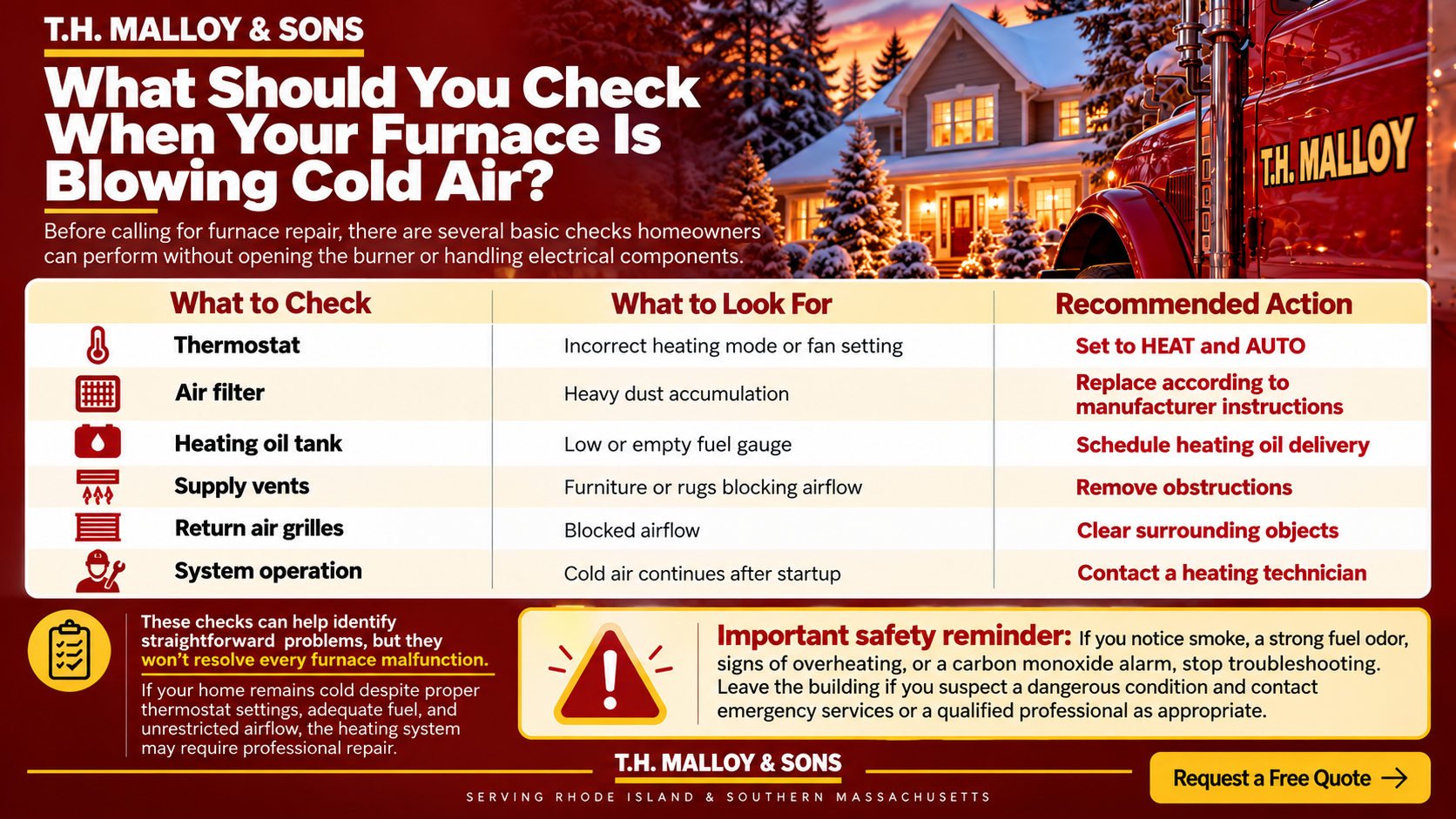
Important safety reminder: If you notice smoke, a strong fuel odor, signs of overheating, or a carbon monoxide alarm, stop troubleshooting. Leave the building if you suspect a dangerous condition and contact emergency services or a qualified professional as appropriate.
Restore Your Home Heating System With T.H. Malloy & Sons
A furnace blowing cold air instead of heating your house can quickly become a serious inconvenience, especially during winter in Rhode Island and Southern Massachusetts. While some problems involve simple thermostat adjustments or clogged filters, others require professional attention to ensure your heating system operates safely and efficiently.
At T.H. Malloy & Sons, we've been serving homeowners since 1935. Our team provides heating system maintenance, repairs, equipment upgrades, and dependable heating oil delivery to help keep homes comfortable throughout the winter. Whether your furnace has stopped producing heat, needs professional maintenance, or requires a reliable heating oil supply, we're here to help. Contact T.H. Malloy & Sons today to schedule heating system service and get your home comfortably warm again.
Frequently Asked Questions About Furnaces Blowing Cold Air
Why Is My Furnace Blowing Cold Air When the Heat Is On?
Your thermostat fan may be set to ON instead of AUTO, causing it to circulate unheated air between heating cycles. Other possible causes include a clogged filter, burner malfunction, low heating oil, or an activated safety switch.
Why Is My Furnace Running but Not Heating My House?
Your furnace may have an ignition problem, interrupted fuel supply, restricted airflow, or malfunctioning electrical components. If the blower operates but the burner doesn't produce heat, your house may remain cold despite the system running.
Why Is My Furnace Blowing Cold Air All of a Sudden?
Sudden cold airflow may result from a thermostat setting change, an empty heating oil tank, a tripped safety control, or an unexpected burner failure. Start by checking the thermostat and fuel supply before contacting a technician.
Should I Turn My Furnace Off If It's Blowing Cold Air?
If your furnace continues blowing cold air and won't heat the house, you can turn off the heating demand at the thermostat while arranging service. However, if there's smoke, a fuel leak, or another safety concern, follow appropriate emergency precautions and contact qualified help.
Why Is My Furnace Blowing Cold Air After Changing the Filter?
If your furnace continues blowing cold air after replacing the filter, a safety control may still be activated, or the problem may involve the burner, thermostat, or another component. A professional technician can inspect the system and identify the underlying issue.
Can Low Heating Oil Cause a Furnace to Blow Cold Air?
Yes. An oil-fired furnace needs a consistent fuel supply to produce heat. If your heating oil tank runs empty or fuel delivery is interrupted, the burner may shut down even though the blower continues running.
Stay Informed with Our Newsletter
Sign up to receive our latest updates

Insights for Your Home Comfort
Stay informed and ahead of the weather with our expert insights. Visit our blog for the latest updates and tips to maximize your home comfort.