
How Long Will 100 Gallons of Heating Oil Last?
Key Takeaways
- Average heating oil usage: Many homes consume approximately 3 to 7 gallons of heating oil per day during winter.
- How long 100 gallons lasts: A 100-gallon supply may last 14 to 33 days, depending on daily consumption.
- Cold weather increases consumption: Your heating system uses more fuel during freezing temperatures and prolonged cold spells.
- Home efficiency matters: Proper insulation, thermostat settings, and regular heating system maintenance can help reduce fuel consumption.
- Monitor your tank level: Consider scheduling a heating oil delivery when your tank reaches approximately one-quarter full.
- Plan ahead for winter: Automatic heating oil delivery from T.H. Malloy & Sons can help you maintain a reliable fuel supply throughout the heating season.
When temperatures start dropping in Rhode Island and Massachusetts, one of the biggest concerns for homeowners who rely on heating oil is running out of fuel. If your tank is getting low, you might be wondering whether the remaining oil will last another week, two weeks, or until your next scheduled delivery.
So, how long will 100 gallons of heating oil last? For a typical home, 100 gallons may last approximately 14 to 33 days during winter, assuming daily consumption of 3 to 7 gallons. However, extremely cold temperatures, poor insulation, and an older heating system can cause your fuel supply to run out much faster.
Understanding how quickly your home consumes heating oil can help you plan ahead, avoid emergency deliveries, and keep your heating system running throughout the colder months.
How Long Does 100 Gallons of Heating Oil Last?
The amount of time 100 gallons of heating oil will last depends primarily on how many gallons your heating system burns each day. During winter, a residential heating system may consume approximately 3 to 7 gallons of heating oil daily. However, this is only a general estimate, and actual usage depends on your home's heating demands.
Here's a simple breakdown of how long 100 gallons might last based on daily fuel consumption.
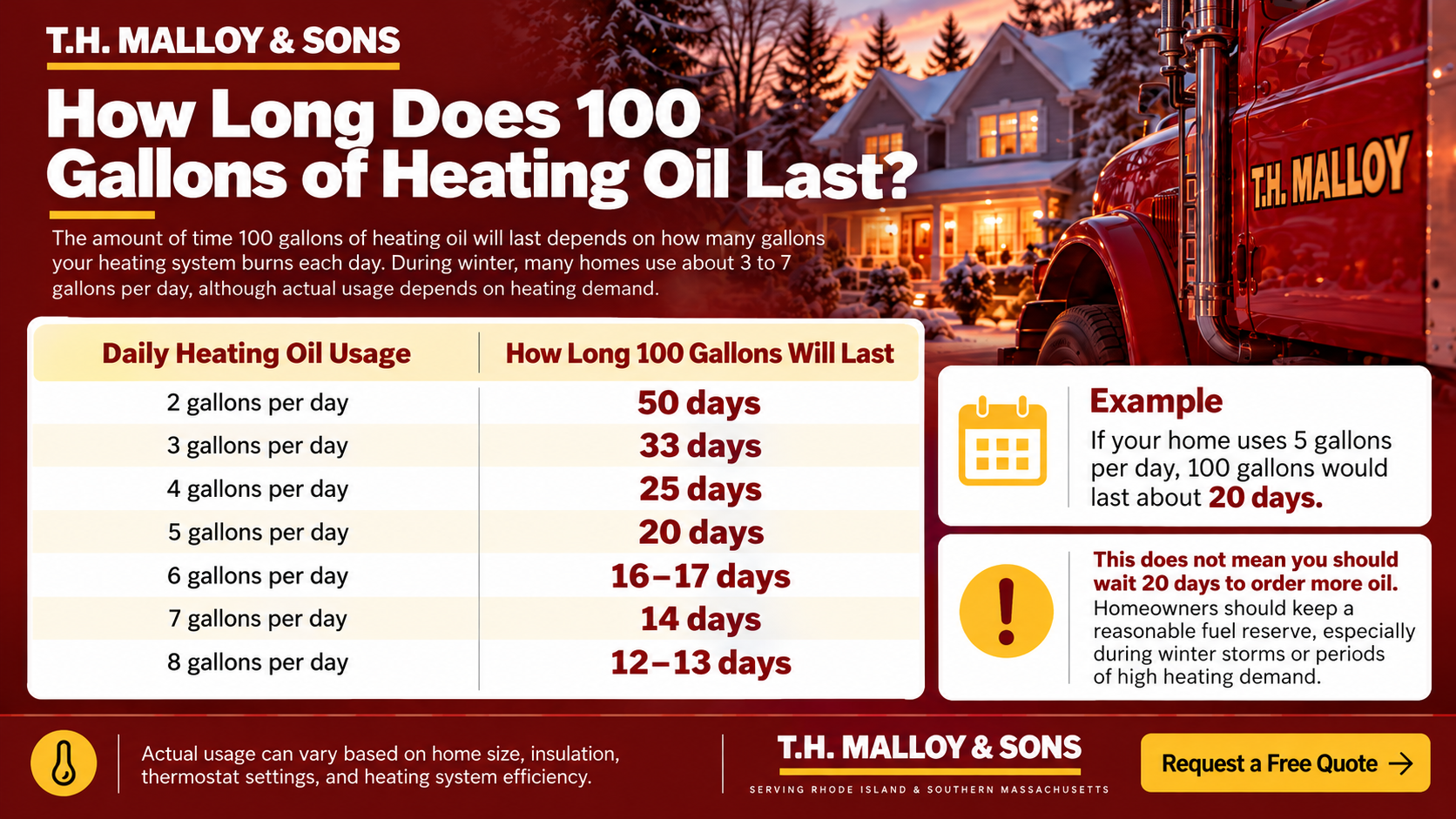
For example, if your home uses an average of 5 gallons daily, a 100-gallon supply would last approximately 20 days.
However, that doesn't necessarily mean you should wait 20 days before ordering more heating oil. Homeowners should maintain a reasonable fuel reserve, particularly during winter storms or periods of unusually high heating demand.
What Affects How Long 100 Gallons of Heating Oil Lasts?
Even homes with similar square footage can consume very different amounts of heating oil. Several factors determine how frequently your furnace or boiler operates and how quickly your tank empties.
1. Outdoor Temperatures
Cold weather is one of the biggest reasons heating oil consumption increases.When outdoor temperatures are mild, your heating system doesn't need to run as frequently to maintain a comfortable indoor temperature. However, once temperatures drop below freezing, your furnace or boiler may operate for longer periods.
For homeowners in Rhode Island and Southern Massachusetts, heating oil usage typically increases during the coldest parts of winter. A home that uses 3 gallons daily during a mild week may consume 6 gallons or more during a particularly cold stretch. Therefore, it's important to consider upcoming weather conditions rather than relying entirely on your usual fuel consumption.
2. Home Size and Insulation
Larger homes generally require more energy to heat, but square footage isn't the only factor that matters. A well-insulated 2,500-square-foot home may retain heat more effectively than a smaller house with drafty windows, poor attic insulation, and older exterior doors.
Common sources of heat loss include:
- Attics: Insufficient insulation allows heated air to escape.
- Windows and doors: Gaps around frames can let cold air enter.
- Basements: Uninsulated basement walls and rim joists can contribute to heat loss.
- Exterior walls: Poor insulation makes maintaining indoor temperatures more difficult.
- Air leaks: Openings around plumbing, electrical fixtures, and vents can increase heating demand.
Improving insulation and sealing air leaks can help your home retain heat longer, reducing how frequently your heating system needs to operate.
3. Thermostat Settings
Your preferred indoor temperature also affects how quickly you use heating oil. For instance, maintaining a constant temperature of 72°F generally requires more fuel than keeping your thermostat at 68°F under similar conditions.
Consider these practical ways to manage heating demand:
- Keep your thermostat at a comfortable but reasonable temperature.
- Lower the temperature slightly when you're sleeping or away from home.
- Use a programmable thermostat to maintain consistent heating schedules.
- Avoid unnecessarily high thermostat settings during cold weather.
Even small adjustments can reduce heating demand over time, particularly during the colder months.
However, avoid setting the temperature excessively low, as this could increase the risk of frozen pipes.
4. Heating System Age and Efficiency
Your furnace or boiler plays an important role in determining how much heating oil your home consumes. Older heating equipment may operate less efficiently than properly maintained modern systems. As a result, it may require more fuel to deliver the same amount of heat.
Additionally, dirty burners, clogged filters, and poorly adjusted components can affect heating performance. Scheduling routine maintenance helps identify these problems before they lead to higher fuel consumption or unexpected breakdowns.
At T.H. Malloy & Sons, we provide heating system maintenance and service to help homeowners keep their equipment operating reliably throughout the winter.
How Much Heating Oil Does a House Use Per Day in Winter?
Many homeowners wonder how much heating oil a typical house burns during a Rhode Island winter. Although daily consumption varies, approximately 3 to 7 gallons per day is a useful planning range for many oil-heated homes during colder weather.
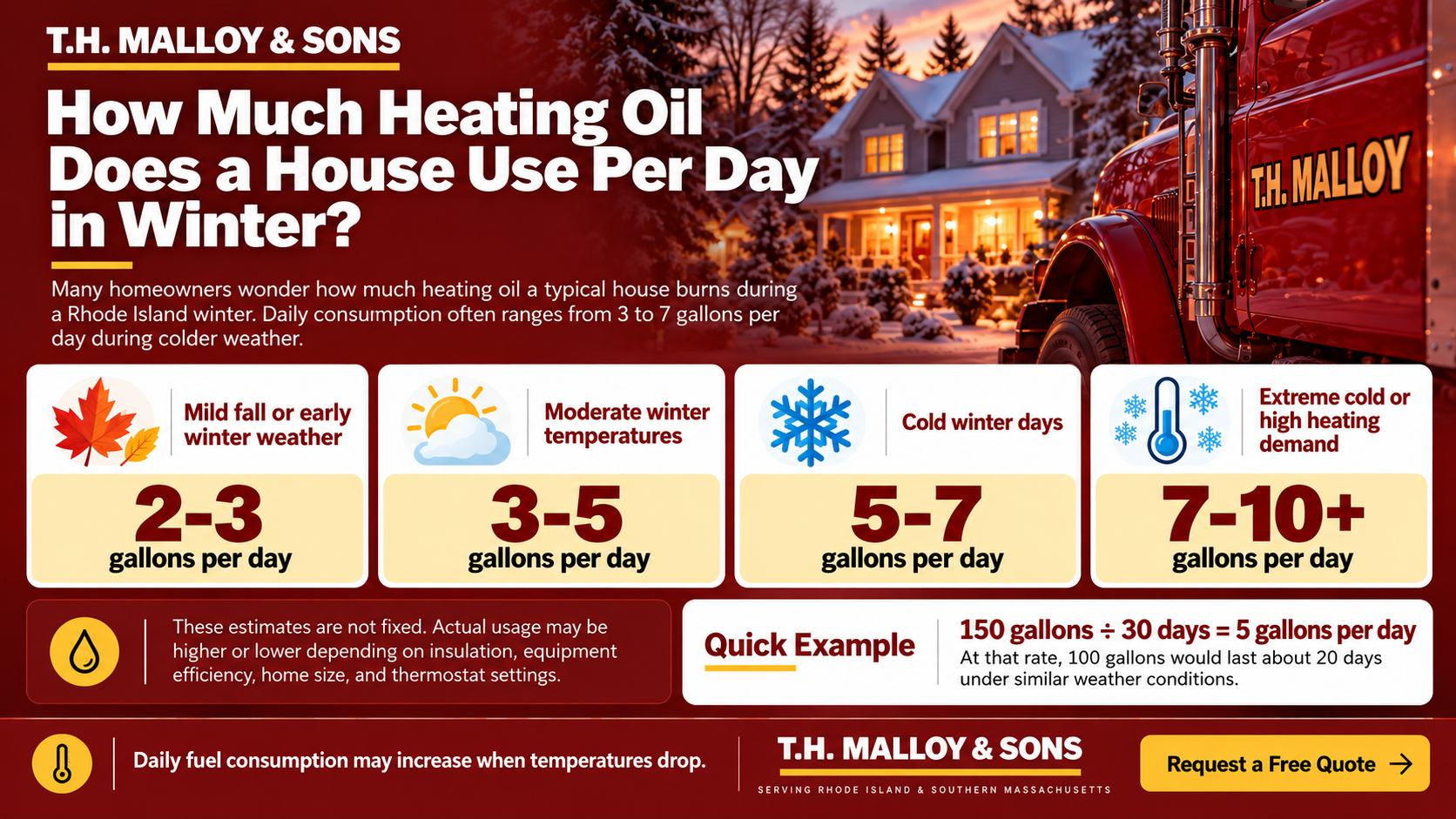
These estimates are not fixed consumption rates. Your actual usage may be higher or lower depending on insulation, equipment efficiency, home size, and thermostat settings. To get a more accurate estimate, look at how many gallons you consumed between your two most recent heating oil deliveries.
For example, if you used 150 gallons over 30 days, your average daily consumption would be: 150 gallons ÷ 30 days = 5 gallons per day
At that rate, 100 gallons would theoretically last 20 days under similar weather conditions. Keep in mind that your daily fuel consumption may increase when temperatures drop.
How Do You Know How Much Heating Oil Is Left in Your Tank?
Before estimating how long your heating oil will last, you need to know how much fuel remains in your tank.
Most residential heating oil tanks have a gauge that displays the approximate fuel level.
Check Your Heating Oil Tank Gauge
A typical oil tank gauge shows fractions such as:
- Full: The tank is near its normal maximum fill level.
- 3/4: Approximately 75% of the tank's usable capacity remains.
- 1/2: Around half of the usable capacity remains.
- 1/4: Your fuel supply is getting low, and you should arrange a refill.
- Empty: Your tank is at or near the bottom of its indicated fuel range.
For a nominal 275-gallon heating oil tank, the amount of fuel indicated by these readings depends on the tank's dimensions and actual usable capacity. A tank labeled 275 gallons does not necessarily contain 275 gallons when filled. If your gauge is inaccurate, damaged, or difficult to read, a heating oil professional can help evaluate it.
Calculate How Many Days of Heating Oil You Have Left
Once you know approximately how much heating oil remains, estimating its duration is relatively straightforward.
Use this formula: Gallons of heating oil remaining ÷ Average gallons used per day = Estimated days remaining
For example: 100 gallons ÷ 5 gallons per day = 20 days
This calculation provides a starting point for planning your next heating oil delivery. However, it's best to allow extra time for colder weather, delivery schedules, and unexpected changes in fuel consumption.
When Should You Schedule Your Next Heating Oil Delivery?
One of the most common mistakes homeowners make is waiting until their heating oil tank is almost empty before ordering more fuel. Although your remaining supply might last another several days, unexpected cold weather can change that estimate quickly. As a general guideline, consider scheduling a refill when your tank reaches approximately one-quarter full, or sooner when severe weather is expected.
Here are a few situations when you should consider ordering heating oil:
- Your tank is approaching one-quarter full. Scheduling a refill early gives you more time to arrange delivery.
- A winter storm is approaching. Snow and ice can affect road conditions and delivery schedules.
- Temperatures are expected to drop significantly. Your heating system may consume more oil than usual.
- You're leaving home for several days. Make sure you have sufficient heating oil to maintain safe indoor temperatures while you're away.
- Your fuel consumption has recently increased. A sudden increase may mean you'll need another delivery sooner than expected.
Homeowners who prefer not to monitor their tanks manually can also consider automatic heating oil delivery. T.H. Malloy & Sons offers automatic delivery and tank monitoring services that help track heating oil consumption and schedule deliveries based on household usage and weather conditions.
How Can You Make 100 Gallons of Heating Oil Last Longer?
Although you can't control winter temperatures, there are several practical ways to reduce unnecessary heating oil consumption.
Seal Drafts Around Windows and Doors
Cold air entering through gaps around windows and doors can force your heating system to run more frequently. Weatherstripping, caulking, and other basic air-sealing improvements can help reduce heat loss.
Improve Your Home's Insulation
Proper attic, wall, and basement insulation helps prevent heated air from escaping. For older homes in Rhode Island, insulation improvements may significantly reduce heating demand, depending on the property's existing condition.
Schedule Annual Heating System Maintenance
A properly maintained furnace or boiler is better positioned to operate efficiently and reliably. During a professional maintenance appointment, a technician can inspect important heating components, clean necessary parts, and identify performance issues.
Use Your Thermostat Efficiently
A programmable thermostat can help manage indoor temperatures throughout the day. For example, you can schedule slightly lower temperatures while you're asleep or away from home without having to make manual adjustments repeatedly.
Monitor Your Heating Oil Consumption
Keeping track of how quickly your oil tank empties helps you identify changes in fuel consumption. If your heating oil usage suddenly increases without an obvious explanation, consider having your heating system inspected. By combining these practices, homeowners can better manage heating oil consumption and reduce the likelihood of running low unexpectedly.
Schedule Reliable Heating Oil Delivery With T.H. Malloy & Sons in Rhode Island
At T.H. Malloy & Sons, we've been helping homeowners stay warm since 1935. We provide dependable heating oil delivery throughout Rhode Island and Southern Massachusetts, along with automatic fuel delivery, tank monitoring, heating system maintenance, and 24/7 emergency service. Whether you need to refill your tank before winter or want a more convenient way to manage your heating oil supply, our team is here to help.
Contact T.H. Malloy & Sons today to schedule heating oil delivery and keep your home warm throughout the winter.
Frequently Asked Questions About Heating Oil Usage
How Long Will 50 Gallons of Heating Oil Last?
If your home uses approximately 5 gallons of heating oil daily, 50 gallons would last around 10 days. During particularly cold weather, that amount may run out sooner.
How Long Will 100 Gallons of Heating Oil Last in a 275-Gallon Tank?
The size of your heating oil tank doesn't directly determine how long 100 gallons will last. Your home's daily fuel consumption is what matters. If your heating system uses 4 gallons per day, 100 gallons would last approximately 25 days, regardless of whether it's stored in a 275-gallon tank or a larger tank.
How Long Will 200 Gallons of Heating Oil Last?
At an average consumption rate of 5 gallons per day, 200 gallons would last approximately 40 days. However, colder temperatures and higher heating demand can shorten that timeframe.
Is 100 Gallons of Heating Oil Enough for a Month?
It can be, depending on your home's fuel consumption. To make 100 gallons last 30 days, your heating system would need to use approximately 3.3 gallons per day or less. During colder winter weather, many homes may exceed that consumption rate.
Stay Informed with Our Newsletter
Sign up to receive our latest updates

Insights for Your Home Comfort
Stay informed and ahead of the weather with our expert insights. Visit our blog for the latest updates and tips to maximize your home comfort.