
How Much Heating Oil Does a House Use Per Day in Winter?
Key Takeaways
- Many oil-heated homes in the Northeast may use roughly 4–7 gallons of heating oil per day when averaged across a typical six-month heating season. Actual daily use can be much lower or higher.
- Outdoor temperature is one of the biggest factors affecting daily heating oil consumption.
- Home size, insulation, thermostat settings, hot water use, and heating system efficiency also affect how quickly a tank runs low.
- Tracking your oil deliveries and tank levels can help you estimate your household's daily fuel use.
- Regular heating system maintenance and automatic delivery can make it easier to manage winter fuel needs.
If you heat your home with oil, knowing your heating oil usage per day can help you plan deliveries, estimate winter expenses, and avoid running out of fuel during a cold spell. However, there is no single daily amount that applies to every home. A small, well-insulated house may use far less oil than a large home with older windows or an aging heating system. In Rhode Island and Southern Massachusetts, outdoor temperatures can also change fuel use from one day to the next. Here's what affects daily consumption and how to estimate how much oil your home needs.
How Much Heating Oil Does a House Use Per Day in Winter?
A residential home may use approximately 3 to 7 gallons of heating oil per day during winter, depending on its heating needs. This is a general estimate, not a fixed daily average. A home may use less during mild weather and significantly more during a prolonged cold spell.
For example, if your home uses 5 gallons per day, a 100-gallon supply would last about 20 days. At 3 gallons per day, it would last around 33 days. At 7 gallons per day, it would last about 14 days.
These estimates are useful for planning, but your actual consumption will depend on your home's size, insulation, heating equipment, and outdoor temperatures. You can also read our guide on how long 100 gallons of heating oil may last for more examples.
What Factors Affect Daily Heating Oil Usage?
Two homes in the same neighborhood can use very different amounts of heating oil. The amount your system burns depends on how much heat your home needs and how efficiently it can produce and retain that heat.
1. Outdoor Temperature
Cold weather is one of the biggest factors affecting heating oil consumption. When temperatures drop, your heating system needs to run longer or more often to maintain your preferred indoor temperature.
For example, your home may use around 3 gallons per day during a stretch of mild winter weather but require 6 gallons or more during freezing conditions. These figures are illustrative; actual use varies by home and heating system.
The U.S. Energy Information Administration (EIA) explains that heating demand is seasonal, with most heating oil use occurring from October through March.
2. Home Size and Layout
Larger homes generally need more energy to heat because they have more space to keep warm. However, square footage alone does not determine daily fuel consumption.
Other factors include:
- Number of floors and rooms
- Ceiling height and open floor plans
- Number and size of windows
- How well heat moves between rooms
- Whether certain areas are heated more often than others
A smaller home with poor insulation may use more oil than a larger, well-insulated home.
3. Insulation and Air Leaks
Insulation helps slow heat loss through walls, ceilings, floors, and other parts of your home. When insulation is inadequate, your heating system may need to run more frequently to replace lost heat.
Drafts around windows, doors, attic openings, and exterior walls can also allow warm air to escape. Sealing these gaps and improving insulation can help your home retain heat and reduce the amount of fuel needed to stay comfortable.
4. Thermostat Settings
Your thermostat setting affects how much heat your system needs to produce. Keeping your home at a higher temperature throughout the day generally increases heating demand.
You can help manage consumption by:
- Choosing a comfortable but reasonable indoor temperature.
- Lowering the thermostat when everyone is asleep or away, if appropriate for your household.
- Avoiding frequent, unnecessary temperature adjustments.
- Using a programmable thermostat to follow a consistent schedule.
The U.S. Department of Energy recommends setting the thermostat back by 7°F to 10°F for at least eight hours a day, such as when you're asleep or away from home. This adjustment can help reduce annual heating and cooling costs by up to 10%, depending on your home and heating system.
5. Heating System Condition and Efficiency
Your furnace or boiler also affects how much heating oil your home uses. A system that is dirty, poorly adjusted, or in need of maintenance may not operate as efficiently as it should.
Regular professional maintenance helps keep key components in proper working condition. It also gives a technician an opportunity to identify issues that may affect heating performance.
If you want to understand how fuel becomes heat in your home, see our guide to how a home heating oil system works.
How to Estimate Your Home's Heating Oil Usage Per Day
You do not need specialized equipment to get a rough estimate of your household's daily heating oil consumption. You can use your delivery records and the number of days between deliveries to calculate an approximate figure.
Use Your Delivery History
A simple way to estimate daily use is to divide the gallons delivered by the number of days since your previous delivery. This works best when you compare similar periods and account for the oil that was already in your tank.
For example:
- Heating oil delivered: 150 gallons
- Time between deliveries: 30 days
- Estimated daily usage: 150 ÷ 30 = 5 gallons per day
This is an approximation because your tank may not have been at the same level before each delivery. Changes in weather and household heating habits can also affect the result.
Track Your Tank Level
Your tank gauge can help you monitor how quickly your oil supply is decreasing. Check it regularly, especially during colder months, and compare the readings over time.
Keep in mind that a tank gauge provides an estimate rather than an exact measurement of daily consumption. Recording delivery dates, gallons received, and gauge readings can give you a clearer picture of your household's fuel use.
How Much Heating Oil Does a House Use in a Month?
Monthly consumption depends on the number of cold days, the home's heating needs, and how often the system runs. You can estimate monthly use by multiplying your daily consumption by the number of days in the month.
Here is an example based on different daily usage levels:
Daily Heating Oil Use - Estimated 30-Day Consumption
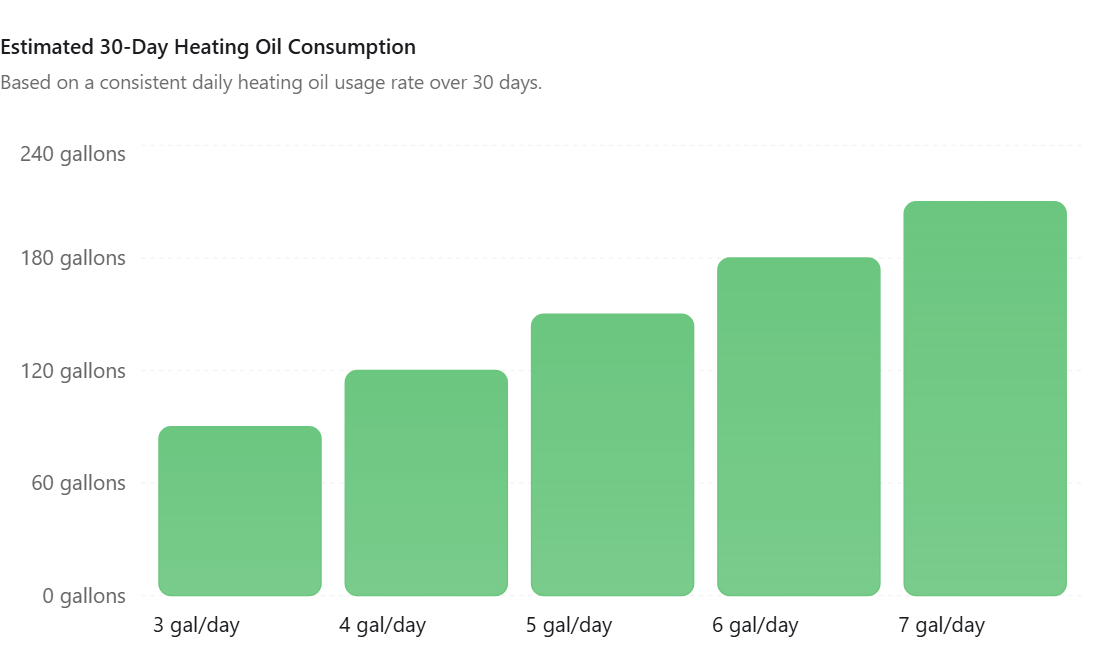
Estimates assume consistent daily consumption for 30 days. Actual heating oil usage varies depending on outdoor temperatures, insulation, home size, thermostat settings, and heating system efficiency.
A home that uses 3–7 gallons of heating oil per day will consume approximately 90–210 gallons over 30 days. For example, a household using 5 gallons daily will need about 150 gallons per month. Actual heating oil consumption in Rhode Island and Southern Massachusetts depends on outdoor temperatures, home size, insulation, thermostat settings, and heating system efficiency. Tracking daily usage can help homeowners estimate monthly heating oil needs, plan fuel deliveries, and manage winter heating costs.
How Can You Reduce Daily Heating Oil Consumption?
Although you cannot control outdoor temperatures, there are practical ways to reduce unnecessary heating demand.
Consider these steps:
- Seal drafts: Check around doors, windows, and other openings where warm air may escape.
- Improve insulation: Pay attention to attics, exterior walls, and other areas where heat loss may occur.
- Adjust thermostat settings: Use a reasonable temperature and consider setbacks when the home is unoccupied.
- Maintain your heating system: Schedule professional maintenance to keep your furnace or boiler operating properly.
- Keep vents and radiators clear: Avoid blocking heat outlets with furniture, rugs, or other objects.
- Monitor fuel consumption: Track deliveries and tank levels so you can identify changes in usage.
Small improvements can help reduce heat loss and unnecessary system operation.
When Should You Schedule a Heating Oil Delivery?
It is important to monitor your tank before it gets too low, especially during winter. Waiting until the tank is nearly empty can leave you with limited time to arrange a delivery during periods of high demand or severe weather.
As a general practice, consider scheduling a refill when your tank reaches approximately one-quarter full, while following any specific guidance from your fuel provider.
You should also plan ahead when:
- A prolonged cold spell is forecast.
- Your household is using more oil than usual.
- You notice your tank level dropping faster than expected.
- You are approaching a busy winter period when delivery schedules may be tighter.
For homeowners who prefer not to track their tank manually, automatic delivery can help simplify fuel planning.
Practical Tips for Monitoring Your Heating Oil Supply
Homeowners can safely monitor their tank gauge and keep delivery records. However, fuel tanks, oil lines, burners, and other heating system components should be inspected or repaired by qualified professionals.
Here are a few practical habits to follow:
- Check your tank gauge regularly. Pay closer attention during freezing weather.
- Keep a record of deliveries. Note the date and number of gallons received.
- Watch for unusual changes. A sudden increase in consumption may be related to colder weather, changes in household use, or a heating system issue.
- Schedule professional maintenance. Have your furnace or boiler inspected according to manufacturer recommendations and your service provider's guidance.
- Plan deliveries before your tank gets low. Avoid relying on last-minute orders during winter storms.
If you notice an oil leak, a strong fuel odor, or signs of a malfunction, do not attempt to repair the equipment yourself. Contact a qualified heating professional. If you suspect a fuel leak, follow the appropriate safety guidance and keep away from ignition sources.
Contact T.H. Malloy for Home Heating Oil Delivery in Rhode Island
Knowing how much heating oil your home uses each day can help you plan deliveries and manage winter heating costs. For homeowners in Rhode Island and Southern Massachusetts, staying ahead of fuel needs is especially important during freezing temperatures, snowstorms, and extended cold spells.
At T.H. Malloy & Sons, Inc., we provide residential heating oil delivery, automatic delivery, and tank monitoring services to help local homeowners maintain a reliable fuel supply throughout the winter. Our automatic heating oil delivery service uses fuel consumption patterns and local weather conditions to help schedule refills before your tank runs low.
Need heating oil delivery in Rhode Island or Southern Massachusetts? Contact T.H. Malloy & Sons, Inc. today to discuss your heating needs, or explore our service areas to see if we deliver to your town.
Frequently Asked Questions About Daily Heating Oil Usage
How many gallons of heating oil does a house use per day in winter?
Many homes use approximately 3 to 7 gallons per day during winter. However, actual consumption depends on outdoor temperatures, home size, insulation, thermostat settings, and heating system efficiency.
Is using 5 gallons of heating oil per day normal?
Yes. Using around 5 gallons per day can be within a typical winter range for an oil-heated home. However, whether this is reasonable for your property depends on its size, heating needs, and the weather.
How long will 100 gallons of heating oil last in winter?
A 100-gallon supply may last approximately 14 to 33 days if your home uses 3 to 7 gallons daily. At an average of 5 gallons per day, it would last about 20 days.
Does cold weather increase heating oil consumption?
Yes. Your heating system generally needs to run longer or more frequently when outdoor temperatures drop. During extended cold spells, daily heating oil consumption can increase compared with milder winter days.
When should I schedule a heating oil delivery?
As a general guideline, consider scheduling a delivery when your tank reaches approximately one-quarter full. Ordering before your supply gets too low gives you more time to arrange a refill, particularly during busy winter periods.
Stay Informed with Our Newsletter
Sign up to receive our latest updates

Insights for Your Home Comfort
Stay informed and ahead of the weather with our expert insights. Visit our blog for the latest updates and tips to maximize your home comfort.